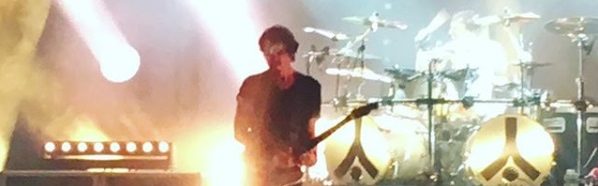
Artist Profile: Tim Howley, Fit for an Autopsy

Tim Howley, guitarist for New Jersey-based Fit for an Autopsy, recently sat down with Metal Health Matters in Buffalo, where they were supporting Hatebreed on their 25th anniversary tour. FFAA had just finished their set – a blistering six song collection of some of their best material, including MHM’s favorite track, Black Mammoth. Their last album, The Great Collapse, is a scathing commentary on social ills and political corruption. Tim is a foreboding presence on stage, serious and intimidating, his white 7-string Ibanez in contrast to the black tim.jpgshirt and pants that seems to be the uniform. But behind the serious nature of the performance and the band in general, and the several feet long braided beard that almost precedes him, was a warm and generous guy who was happy to tell his story.

Tim was initially drawn to heavy music as a kid by his dad, but not in the usual way. He described his dad as a pretty casual fan, noting the car rides they shared with the radio tuned to the local rock station. While his dad was letting it play in the background, Tim was like a sponge, absorbing all he hears, drawn in particular to Black Sabbath, Metallica, and Alice in Chains.

“The funny thing, the funny part about it is that my dad doesn’t like metal. At all. Not in the fucking least. He likes Sabbath, he likes Rob Zombie but only because he went to Ozzfest and he saw him once. He thinks Slipknot is kinda cool. He likes Clutch and Mastodon. But like anything else – dude, no way. He would never be caught dead listening to my music. No way.”

Tim goes on to cite some of the other important influences in his journey into heavy music. A family friend – an older girl who was into Marilyn Manson was one of the gateways into more extreme music:

“…now I love Manson, but [at first] I was scared of what I didn’t understand. And obviously when you’re a kid that’s just a survival thing. You don’t know it, so you’re like stranger danger. But now once I understood it and I got into it more, I was like ‘this is fucking sick.'”

Friends and internet file sharing began to expand his horizons further. Tim described himself, musically, as a “garbage disposal,” obsessing over any metal he could find. His passion for the music got cemented when he began to encounter the metal community in the wild:

“So finally I started going to shows and going to different places on Long Island going to see live bands and what not. The first bigger metal and hardcore show I went to was Ozzfest. So, like, the cool part about that was it was, you know, a million bands that I haven’t heard of at that point. And I’m like oh wow. Like that band was amazing, I gotta go listen to them. Give me more bands that sound like this.”

But behind all this was an acknowledgement that this is not normal, mainstream music. He had a few friends who were into it and helped to expose him to new bands, but by and large, Tim got used to being outside of the mainstream.:

“Ah, you dress different, oh, you dress weird. You listen to crazy music I can’t understand the lyrics and that’s another thing people are always quick to judge what they don’t understand. So yeah, when I was in middle school I had maybe 5-10 kids in my whole class that listened to the same type of stuff that I did. And everybody else was like ah, fuck that kid. I don’t listen to that stuff – he’s weird.”
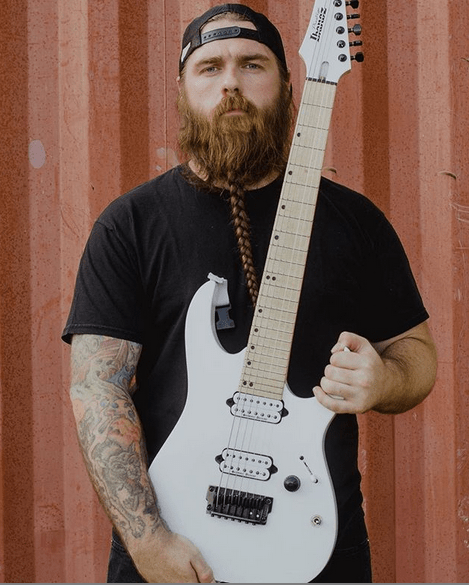
tim2Thankfully, the community he encountered at those pivotal first few live shows provided the support he needed.

“…there was that sort of camaraderie and that that friendship that everybody had because everybody – it’s not the norm, it’s not the social norm so it’s since everybody’s an outcast we all felt kinda like you know we felt like we were closer to each other, you know. That’s the cool part about metal and hardcore and coming to these shows.”

Like many others, Tim acknowledged that music is a helpful way to process some of the more difficult parts of life. At times, his listening choices are a reflection of current mood, tapping into bands like Hatebreed and Sepultura and “some of the most abrasive metal in the world.” But at other times, a diverse collection of artists from other genres – Billie Eilish, John Denver, Iron and Wine, for example – is what does it for him. He cites a uniquely personal connection to the music, separate from whatever the original artist was writing about. “It doesn’t matter to me personally what the person is trying to get at – it’s more of what I feel in the music.”

Tim’s journey into metal is a story a lot of fans can relate to. An open mindedness is what let him discover (and keep discovering) a form of music that isn’t readily accessible to most people. As an example, he noted originally being put off by the falsetto vocals of Mercyful Fate singer King Diamond, but he gave it another shot.

“I thought it was so obnoxious. And then the more I listened to The Crusade, that first King Diamond album, it was just – I liked it more and more and more.”

Similarly, the way the metal community tends to dress – black on black – is just a preference to Tim. It wasn’t a rebellion against society, it’s just what appeals to him. Once you can look beyond the beard, the tattoos, the long hair, you see a guy who found his community when the mainstream wasn’t a good fit for him. And while it’s not a community for everyone, it’s truly important to those in it. This is his tribe, his talent, his coping.

FFAA put on a great set that night, performing in a small club with the energy and skill and intensity, just like they were at Wacken (which they were). I’d like to think they know how much their music and the metal community means to us all. Fit for an Autopsy is one of those bands that will be the future of the scene and people like Tim, despite his shredding skills, are a big part of what makes the most extreme music feel so relatable and welcoming.

Tim is a proud endorser of Ibanez guitars, Mesa Boogie amps, and Seymour Duncan Pickups. Fit for an Autopsy’s album The Great Collapse, on from Nuclear Blast Records, can be found on all major retail and streaming outlets.

Follow Tim on Instagram @timtshw; Fit for an Autopsy @fitforanautopsy, and Tim’s clothing company, Tombstone Hardware @tombstonehardware
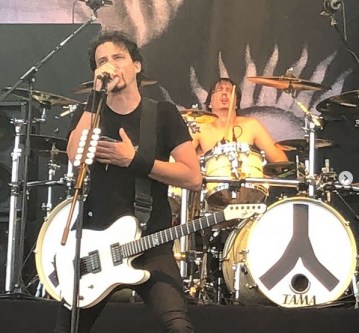
The dynamics of our lives

One of the ways in which heavy, aggressive music can mirror our own lives is in its dynamics. The louder the music, the more powerful this effect can be. The dynamics are those contrasts we see in the music and in our internal worlds and in our relationships. Musically, the term really just refers to the variations of loudness between phrases, but in psychology, we use the term dynamics to refer to the interactions between things – between feelings and moods, between people in a relationship. Maybe one of the reasons that heavy music appeals to some people is that the dynamics inherent in the music are a reflection of what’s really going on inside of us.

Most good music has some variation to it. There might be a “clean” part and a distorted part. A slower part that later picks up. A part is simple, but then it gets more complicated. Guitars playing in unison before going their separate ways. Maybe a softer interlude before the guitar solo comes and melts your face off. A slow, plodding breakdown followed by an explosive return to the main riff. Even bands that seem like they have non-stop intensity still have some variation within the songs, or at least within the album they’re on. A dramatic pause, perhaps. Any shift away from the formula of verse-chorus-verse is welcome. If those dynamics weren’t present, the music would just be boring. When there’s some kind of movement to a song, it connects with us.

gojira2Heavy or aggressive music in particular is great at this. Take, for example Gojira’s The Art of Dying. A relatively simple percussion intro becomes more and more complicated, louder, than simple again. A brief moment of tension occurs before the main riff of the song hits you like a freight train. The brutality surprises you – it’s heavy and it’s unusual. Drummer Mario Duplantier is playing a poly-rhythm, one beat on the snare and another beat altogether with the double kick drum. The tempo again slows somewhat when the vocals come in. Obviously, the song has some powerful, but dark lyrics (some guesses would be that it’s an homage to Aldous Huxley or that it even has some connection to Carl Jung). Toward the end of the song, we get another riff that just keeps going until you’re satisfied. Then an outro. And this kind of interesting songwriting is everywhere in metal and punk. The formulaic styles of the 80s are largely gone as modern metal bands tend to be more progressive than ever before and even punk bands are taking some innovative approaches to song structure.

Some other notable examples of the importance of dynamics:

Image result for devin townsend

But what’s the big deal? Why would  songs like these (or any others) matter? Well, one theory is that the journey these songs take you is connecting with something inside of you.

The same dynamics that make music interesting are also present in all of our lives. When something “explodes” in our lives, it’s usually an important experience for us, whether it be positive or negative. It might be a period of high stress or anxiety (grades, money, a breakup) or intense joy (a new relationship, having a baby, discovering a new interest), but it’s the fact that it’s different than what came before that makes it interesting and memorable. The fact that the part of Metallica’s One that intensifies with Lars’ double bass (“Darkness imprisoning me…”) gets you amped is because there’s some point of connection in this for you. Your subconscious can make the links that we can’t consciously make. Perhaps you enjoy moments like this because it reminds you of something exciting in your life or a time of significant strength. Becoming powerful, especially when someone has experienced periods of supposed weakness, is a life-affirming experience – just as the music communicates through this shift into the song’s heaviest and fastest part

For others, it’s the opposite. What they might resonate with are those songs or passages that build the tension and then release. When everyday life is insanely stressful for whatever reason, having a period of calm or quiet helps us become attuned to a more positive perspective on things. Sure, you could be enduring something intensely difficult (life circumstances, mental health issues, relationship problems, etc.), but when the music changes from fast/loud/aggressive/heavy to something quiet/soft/less intense, it shows us that there’s at least the possibility that life can change for the better. Even a moment of relief is still something when you’re suffering all day. These can be the really emotional times in a live show. Perhaps a moment when the house lights come up for a moment and you notice all the other people who are experiencing the same range of emotions as you. That dynamic means something to them, and it means something to you, too.

But for some people, especially people who struggle with depression, these dynamics could work in a different way. What if every day feels the same? What if your emotions are generally blunted or flat? Maybe there’s a way to use music to get better attuned to the natural rhythms of life that might help you reconnect with some positive emotions. The music can match our emotional state(s) and validate them, but it can help us to achieve some new, more positive ones. When listening to music, especially when listening to music intentionally, pay attention to the ways in which the song (or the album) helps you meet your needs. Feeling weak and powerless? Find something that “explodes” or builds in intensity over the course of the song. Feeling stuck in a rut? Time to check out some new playlists (Spotify does a great job in suggesting new music to me, at least). Get some recommendations from friends, explore something a little beyond your comfort zone (time for harsh vocals?). Virtuoso musicians can be inspiring, too. They find creative ways to play an instrument or write a song that break away from the formula (check out Animals as Leaders, Dream Theater, BTBAM, Allegaeon, Opeth…). Use your musical choices to do something about the parts of your life that aren’t changing by themselves.

Looking out for our own: Contradictions and caring in the metal community – Part 1

As a psychologist and a counselor educator, I spend a lot of time thinking and talking about connections. The connections we find and form with each other are an essential part of our lives. In therapy, problems with these connections – too few of them, troubled relationships, anxiety about our social lives – are a frequent topic of discussion, as they’re implicated in some extremely common conditions, such as depression and anxiety. Much of my work is to help people bring these connections back into balance, but one thing that is often misunderstood is the connection inherent in heavy music and its importance as a source of community (or even family) to its fans.

One one hand, to the uninitiated, the music can seem like it pushes people away – the opposite of connection. The dark content of some lyrics, something covered in an earlier post, can appear disturbing or scary, evoking images of violence, destruction, disease, despair, isolation. Famously, Slayer’s Angel of Death was controversial due to its abhorrent subject matter – the Holocaust, concentration camps, and the cruel experiments of the song’s namesake, Josef Mengele. Hell, even the band names Image result for slayer angel of deaththemselves are disturbing. Take, for example, Infant Annihilator, Pig Destroyer, Rotting Christ, Cattle Decapitation, and Anal Cunt. All great bands, but the band names weren’t exactly picked for their suitability for dinnertime discussion with the family. The same can be said for the imagery on album covers, t-shirts, and the like. Kind of like the previous post on the obscured melodies, the value of the art lies underneath an outer shell that is purposely not friendly and accessible. You need to see past the scary exterior to see how much this art form really has to value.

So what’s the contradiction, then? Well, despite the parts that might appear threatening, angry, and offensive, the metal community is one of the most accepting and supportive groups I have ever encountered. When a community is built around the idea of being outside of the mainstream, its members, by virtue of identifying as a fan of the music, have already been vulnerable with each other, one of the things that strengthens connections between people. They have already said that they’re willing to listen to stories that aren’t the happy cheerful ones. By giving the music a chance, they’re saying that they’re willing to look past the music’s (and the person’s) hard outer shell to see the humanity inside. They’re in touch with the the feelings that have propelled them into these genres. So when you opt in to heavy music, there’s at least a part of you that is open minded enough to see the value of an art form that isn’t mainstream.

In my own experience, I’ve seen the power of this community in some notable ways. In a subsequent part 2 to this post, I’ll cover some some other elements, but the live concert experience is an amazing example of the connectedness and support of the metal community. Some examples to illustrate:

randy blytheJune 13, 2013 – Lamb of God at the Water Street Music Hall, Rochester, NY. Vocalist Randy Blythe had been arrested and subsequently acquitted, in the Czech Republic the previous year after a fan died after a concert (a very tragic, but uncommon occurrence, and in this case, an issue with security at the venue). The documentary As the Palaces Burn is a fantastic account of the incident, trial, and Randy’s integrity. Rather than let the experience sour him on performing live, he spoke briefly about the experience on stage, making a plea for the crowd to look out for each other, ending with “if someone falls down, help them up. Other than that, go fucking crazy.”
October 27, 2018 – Metallica at the KeyBank Center, Buffalo, NY. While it’s something that he was doing on every show of the tour, James Hetfield, metal royalty and all around good guy took a moment to address the “Metallica Family.” Pointing out the multiple generations of fans (note to self: great topic for another post), the frontman for the world’s most successful metal band spoke about the connections among the 20,000 fans in attendance – no matter our age, lifestyle, politics, or appearance, we’re all here for the same reason. Heavy music is one of those things that can quite literally bring people together. Everyone in that room was part of something bigger than themselves, part of a community. We belong to something. But what’s the big deal? Well, if you spend your life feeling like you’re on the outside looking in, feeling as if you don’t have a place in the world and your heavy metal hero welcomes you to the family, it’s an emotional experience. Maybe you’re not lucky enough to have a biological family that offers that sense of comfort and support or consistency. So when Hetfield talks about the ways that we’re all connected, it matters.  Sure, he says this sort of thing a lot, and sometimes it can be just a little cheesy, but you get the sense that it is 100% genuine.

March 2, 2019 – Disturbed at the KeyBank Center, Buffalo, NY. This was a whole day all about connections. I spent the earlier part of the day seeing clients and then met up with some friends to drive to the show. I don’t have a ton of people in my life who are into heavy music, so when I made some new connections a while back with some new friends who seem to really get it, I wanted to keep those connections going for sure. At the show, vocalist David Draiman mentioned the impact of depression and addiction among some friends of his in the industry (Chris Cornell, Chester Bennington, Wayne Static, Layne Staley) and then, with the house lights up, asked the audience to raise their hand if their life had ever been affected by depression or addiction. Virtually everyone had a hand in the air. The suicide lifeline and addiction helpline numbers were displayed on the video screens and left there for a while. The message was that we need to look out for each other. This is a community that thrives on connection and needs to use those connections to help each other. There’s a lot of good that can be done when we notice our fellow humans who are suffering and really try to help them.

Full disclosure: when thinking about this post, I was initially feeling like Draiman’s approach was a little heavy-handed and not genuine – that there was too much showmanship to it, that it was almost too theatrical to be authentic. Similarly, I went to a festival last summer that was billed as being about suicide awareness and prevention and I really didn’t see any mention of this whatsoever when I was there. But in writing this, I’ve gotten to reflect on the heart of the message and in retrospect, anyone who can use their public status and persona to encourage us to help each other in any way possible is doing the right thing. Heavy music is a world all about connection and feeling and realness. Black t-shirts and dark lyrics and offensive band names aren’t actually there to push people away. They’re there to invite in a diverse community of open-minded individuals who will pick you up when you fall, who will support you, who will challenge you to live your life to its fullest.


Just noise? The obscured melodies and messages that define the listener

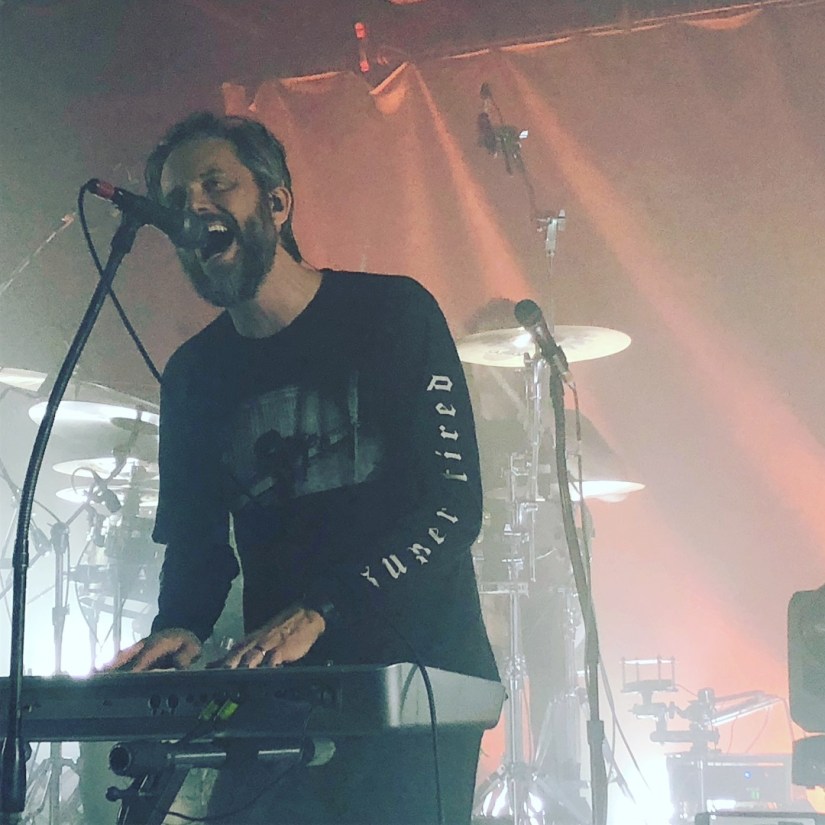
Fans of mainstream music often fail to grasp the appeal of the heavier, faster, aggressive styles of music – it’s so loud! they’re so angry! it’s just screaming! One of my goals with this project is to provide some psychological perspectives to the contrary of that argument, and one of those perspectives has to do with the way that melody is  purposely obscured in the music and its roots in the individual psychology of the listener. This is partly inspired by a recent Between the Buried and Me show, namely vocalist Tommy Rogers (below) and his amazing ability to shift between soft, clean melodies and the best death growls I’ve heard in a while. First time seeing Between the Buried and Me (BTBAM for the diehards), but holy shit are they an amazing band. Insane musicianship and songwriting. And a really lively crowd. Tesseract was great too. Missed Astronoid, though. This show was a little different for me - while I usually know the set list and the back catalog for the bands I see, instead, I just kinda let the BTBAM experience happen live, no spoilers, totally fresh. I’ll make sure to catch them again. @lizstearns83 , you missed a good one! @btbamofficial @tesseractband #metal #progmetal #concertphotography #btbam #tesseract #rochesterny

One thing you may notice about modern metal is that it is WAYYYYY less accessible than early heavy metal (Sabbath, Maiden, , AC/DC, etc.). Ozzy sang lyrics that you could Image result for bruce dickinsonidentify. Angus and Malcolm Young allowed space between the notes, Bruce Dickinson has an operatic, “pretty” style to his vocals. Decades ago, this was still actually edgy (and I mean that in a non-ironic way), but as tastes change and evolve over the years, it takes a bit more to be genuinely edgy today.

One of the points of heavy music is that it is NOT accessible, friendly music for everyone. Some of the things that drew people to heavy music decades ago are the same things that bring new fans into the genre now. There’s a reality that some of us live in that is antithetical to the “normal” culture. Not all of us like to listen to DJ music while on spring break in Florida. We don’t all like to party. We can’t all identify with whatever contemporary pop and hip hop artists are portraying. There’s something about it that just doesn’t feel right. And even if there are parts of people that really do like those things, fans of the more extreme styles of music have at least some other part that is quite different.

But the music can still be utterly beautiful. There are some amazing melodies and song structures inherent in a lot of these genres. Guitarists playing de-tuned and distorted riffs in minor keys, screaming vocals, deep, guttural death growls, rapid-fire double-bass – it can all be stunning, beautiful music – IF you can look past the scary outer shell.

So here’s the controversial theory – the part of us that wants to be outside of the mainstream, that sees the appeal of this music is working to protect us somehow. It serves as a way to avoid emotional pain, even when the music is about said pain. And it works by establishing a “test” that others need to pass. People who ‘get’ this music are essentially saying that they can see you more deeply. When you can look beyond the surface, you are getting the essence of something. When we connect with others around heavy music, we know that these other people, by virtue of their musical preferences, are not superficial and appearance-focused. Maybe they can understand your inner world a little better than others, because they’ve already demonstrated this by being able to see the melodies behind George “Corpsegrinder” Fisher’s vocals or because they see the amazing talent of Nile drummer George Kollias’ brutality behind the kit.Image result for george corpsegrinder fisher

The artists that make this music are on the same playing field as the fans in this regard. To write songs like this and to spend all the time and effort to perfect it, both in the studio and on stage, means that they believe in this so much that it consumes their lives. Most metal musicians are not wealthy. Until you get to the level of bands like System of a Down, Disturbed, and Metallica, you’re unlikely fly in helicopters and vacation in Bora Bora. The vast majority of these artists are traveling the country (hopefully) in sweaty vans and buses so they can play a show to 100 people in a bar somewhere. They’re doing it for the music, certainly not for the wealth and fame. Maybe this is why metal fans can sometimes feel such an intense connection to the artists.

But why does this “test” exist in the first place? It’s definitely not a conscious thought to most people – that’s just not how it works. Subconsciously, we all try to protect ourselves from pain. Defending ourselves is natural and necessary and it’s usually rooted in previous experiences of real or perceived pain. Many metal fans have learned somewhere that expecting life to be “normal” will disappoint you. We grow up with these ideas that everything is supposed to be great. We’re supposed to develop close relationships, find a romantic partner, have loving parents, get through school by just working hard, find a job because an employer will recognize our talents. Life is supposed to be fair. We learn this message from our parents and teachers and from TV and from other places. But it’s rarely the case that this is true. Our parents can disappoint us, our friends can ostracize us, romantic partners reject us. You don’t get invited to parties. You don’t look the way that people in magazines look. You don’t learn the same way that everyone else does. You are different than the mainstream and maybe you’ve been really hurt by the mainstream. Not just the mainstream people, but those mainstream ideas that tell you that things are supposed to be okay. Our problems don’t go away in a 30-minute episode of a show. They don’t go away when we try to make them go away. The notion that things will be okay is just not something we can all count on.

So why have a “test” for the people and things we let in our life? That’s why.

Metallica lyrics implicated in murder? Oh, stop it.

A somewhat recent news story was brought to my attention the other day, and in it, one of those old tropes about heavy music and violence reemerged. In November, a Colorado man murdered his wife and two young daughters (source). And then the media, in its hurry to find a reason for this, was quick to point out that after the man committed this heinous act, he looked up the lyrics to Metallica’s Battery:

Image result for metallica battery

Smashing through the boundaries
Lunacy has found me
Cannot stop the battery
Pounding out aggression
Turns into obsession
Cannot kill the battery
Sure, it’s a powerful song with lyrics that evoke all kinds of things – power, violence, domination – but haven’t we already established that the link between metal and actual violence is nonexistent? Metal is misunderstood in this way (by the mainstream, at least). Metal fans are actually more likely to be the victims of a crime than the perpetrator. Even seen someone fall in the pit at a show? Immediately, we all help them back to their feet. The vast majority of metal fans are peaceful people who don’t want to hurt anyone, despite the lyrical content of the music. This case is an exception, not the rule. Heavy metal is an easy target – we don’t see the media attacking other kinds of music as much, do we?
There has been no research that supports the notion that music like this actually makes someone act violent or enables it. If anything, the research out there proposes that heavy and aggressive music actually helps people process their feelings. A team of researchers from Australia (source) found just that – that when the music matches one’s affective state, it actually helps them work through their feelings by listening and connecting to the music, rather than acting in less healthy ways (violence, substance abuse, etc.). So how might this work?
Like it or not, we’ve all got aggressive and destructive impulses. As much as humans can come together and create beautiful things, we also want to destroy things. Sometimes, we’re very aware of this – “I could just punch someone right now!” But other times, it’s much more subtle. We treat others badly, we treat ourselves badly, we get in our own way. Most people have a part of themselves that feels badly about something. Maybe your home life makes you feel powerless. Maybe your job makes you feel hopeless. Maybe, when you compare yourself to others, you focus on what you do not have. Don’t like the way you look? Feel insecure about your intelligence? Awkward in social situations? Everyone’s got something. If you don’t, you’re probably just trying to protect yourself from feeling vulnerable. Even narcissists are just wounded souls who don’t know what to do other than lash out.
So what do we do with these feelings? Well, something hopefully. Like noted above, sometimes the answer is to indulge in something unhealthy. For some, it’s drinking or drugs, compulsive overeating, self-criticism, self-injury, holding yourself back socially. There are lots of ways this can play out. But there are also some healthy outlets for these feelings, with creative pursuits being one of them. Good music is often music you can connect with. What if the aggressive nature of the instrumentals or the lyrics is something to connect with? Maybe we don’t feel as alone in our own suffering when someone else is singing about an experience we can relate to? The metal kid who goes home to an abusive household  – maybe the music is his way to find others who feel the same way as he does. You’re anxious and depressed? Guess what – there are countless bands who have written songs about these same kinds of experiences. And when you’re feeling isolated in your “real life,” there’s a community of artists and fans who are putting themselves out there to connect with. And then maybe you’re not as alone anymore. (I’ll talk a bunch more about the community of metal and punk rock in another post).
And furthermore, when the music is aggressive in some way – distorted lower tones, played fast, content and imagery evoking all kinds of powerful things – it seems to have a physical element to listening. Even instinctively, we nod or bang our heads to the beat. We need to move, to get the energy out. Ever been to a show and felt exhausted afterwards? All this – the connection, the energy – is part of what actually helps metal fans process our negative feelings and impulses, instead of acting on them inappropriately. What happened in Colorado is awful. But it’s not the fault of Metallica or anyone else in the community. It’s an easy way for the media to reignite what I thought should be a settled issue about music and violence.
What do you all think? Sound off in the comments while you enjoy a destruction-themed Spotify playlist (here).