As a psychologist and a counselor educator, I spend a lot of time thinking and talking about connections. The connections we find and form with each other are an essential part of our lives. In therapy, problems with these connections – too few of them, troubled relationships, anxiety about our social lives – are a frequent topic of discussion, as they’re implicated in some extremely common conditions, such as depression and anxiety. Much of my work is to help people bring these connections back into balance, but one thing that is often misunderstood is the connection inherent in heavy music and its importance as a source of community (or even family) to its fans.
One one hand, to the uninitiated, the music can seem like it pushes people away – the opposite of connection. The dark content of some lyrics, something covered in an earlier post, can appear disturbing or scary, evoking images of violence, destruction, disease, despair, isolation. Famously, Slayer’s Angel of Death was controversial due to its abhorrent subject matter – the Holocaust, concentration camps, and the cruel experiments of the song’s namesake, Josef Mengele. Hell, even the band names  themselves are disturbing. Take, for example, Infant Annihilator, Pig Destroyer, Rotting Christ, Cattle Decapitation, and Anal Cunt. All great bands, but the band names weren’t exactly picked for their suitability for dinnertime discussion with the family. The same can be said for the imagery on album covers, t-shirts, and the like. Kind of like the previous post on the obscured melodies, the value of the art lies underneath an outer shell that is purposely not friendly and accessible. You need to see past the scary exterior to see how much this art form really has to value.
So what’s the contradiction, then? Well, despite the parts that might appear threatening, angry, and offensive, the metal community is one of the most accepting and supportive groups I have ever encountered. When a community is built around the idea of being outside of the mainstream, its members, by virtue of identifying as a fan of the music, have already been vulnerable with each other, one of the things that strengthens connections between people. They have already said that they’re willing to listen to stories that aren’t the happy cheerful ones. By giving the music a chance, they’re saying that they’re willing to look past the music’s (and the person’s) hard outer shell to see the humanity inside. They’re in touch with the the feelings that have propelled them into these genres. So when you opt in to heavy music, there’s at least a part of you that is open minded enough to see the value of an art form that isn’t mainstream.
In my own experience, I’ve seen the power of this community in some notable ways. In a subsequent part 2 to this post, I’ll cover some some other elements, but the live concert experience is an amazing example of the connectedness and support of the metal community. Some examples to illustrate:
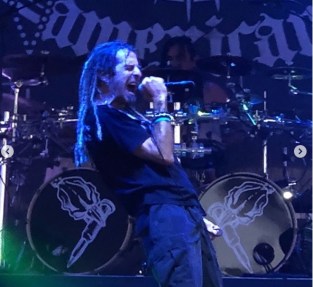 June 13, 2013 – Lamb of God at the Water Street Music Hall, Rochester, NY. Vocalist Randy Blythe had been arrested and subsequently acquitted, in the Czech Republic the previous year after a fan died after a concert (a very tragic, but uncommon occurrence, and in this case, an issue with security at the venue). The documentary As the Palaces Burn is a fantastic account of the incident, trial, and Randy’s integrity. Rather than let the experience sour him on performing live, he spoke briefly about the experience on stage, making a plea for the crowd to look out for each other, ending with “if someone falls down, help them up. Other than that, go fucking crazy.”
October 27, 2018 – Metallica at the KeyBank Center, Buffalo, NY. While it’s something that he was doing on every show of the tour, James Hetfield, metal royalty and all around good guy took a moment to address the “Metallica Family.” Pointing out the multiple generations of fans (note to self: great topic for another post), the frontman for the world’s most successful metal band spoke about the connections among the 20,000 fans in attendance – no matter our age, lifestyle, politics, or appearance, we’re all here for the same reason. Heavy music is one of those things that can quite literally bring people together. Everyone in that room was part of something bigger than themselves, part of a community. We belong to something. But what’s the big deal? Well, if you spend your life feeling like you’re on the outside looking in, feeling as if you don’t have a place in the world and your heavy metal hero welcomes you to the family, it’s an emotional experience. Maybe you’re not lucky enough to have a biological family that offers that sense of comfort and support or consistency. So when Hetfield talks about the ways that we’re all connected, it matters. Sure, he says this sort of thing a lot, and sometimes it can be just a little cheesy, but you get the sense that it is 100% genuine.
March 2, 2019 – Disturbed at the KeyBank Center, Buffalo, NY. This was a whole day all about connections. I spent the earlier part of the day seeing clients and then met up with some friends to drive to the show. I don’t have a ton of people in my life who are into heavy music, so when I made some new connections a while back with some new friends who seem to really get it, I wanted to keep those connections going for sure. At the show, vocalist David Draiman mentioned the impact of depression and addiction among some friends of his in the industry (Chris Cornell, Chester Bennington, Wayne Static, Layne Staley) and then, with the house lights up, asked the audience to raise their hand if their life had ever been affected by depression or addiction. Virtually everyone had a hand in the air. The suicide lifeline and addiction helpline numbers were displayed on the video screens and left there for a while. The message was that we need to look out for each other. This is a community that thrives on connection and needs to use those connections to help each other. There’s a lot of good that can be done when we notice our fellow humans who are suffering and really try to help them.
Full disclosure: when thinking about this post, I was initially feeling like Draiman’s approach was a little heavy-handed and not genuine – that there was too much showmanship to it, that it was almost too theatrical to be authentic. Similarly, I went to a festival last summer that was billed as being about suicide awareness and prevention and I really didn’t see any mention of this whatsoever when I was there. But in writing this, I’ve gotten to reflect on the heart of the message and in retrospect, anyone who can use their public status and persona to encourage us to help each other in any way possible is doing the right thing. Heavy music is a world all about connection and feeling and realness. Black t-shirts and dark lyrics and offensive band names aren’t actually there to push people away. They’re there to invite in a diverse community of open-minded individuals who will pick you up when you fall, who will support you, who will challenge you to live your life to its fullest.

 Metal Health